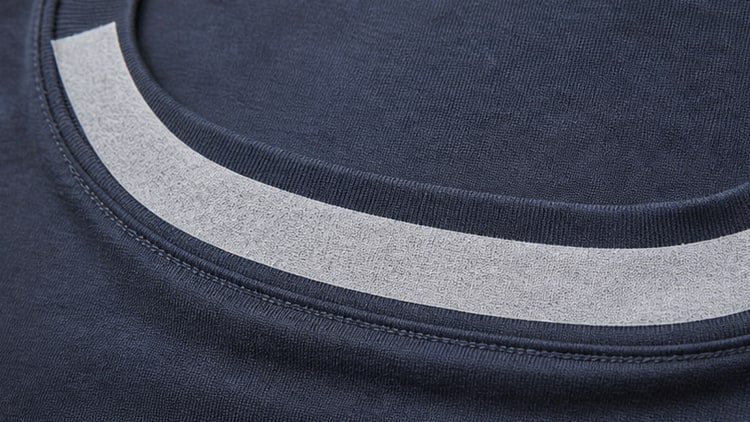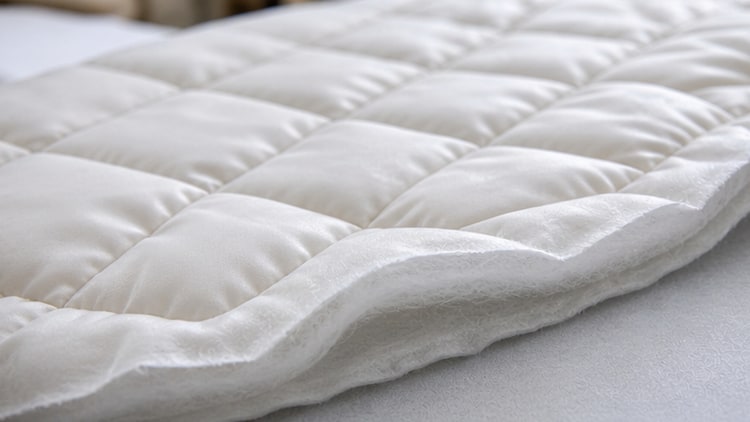
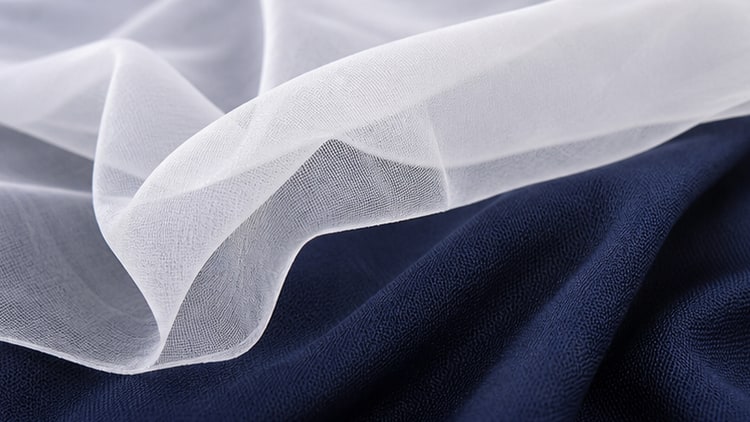
For sheer or lightweight fabrics, interlining selection is immediately visible on the garment surface. Slightly excessive thickness can show a ridge, and a color mismatch can make the interlining line visible from the outside. With these fabrics, appearance stability and hand-feel change should be checked before reinforcement strength.
Why interlining shows through lightweight fabrics
Show-through is caused not only by color difference but also by thickness, adhesive distribution and edge ridges. White interlining may seem obvious for light-colored fabrics, but depending on transparency and dye tone, the edge can become more visible.
Color selection criteria
It is difficult to choose between white, black and natural tones by simply placing the interlining on the shell fabric. Always check after fusing under both natural and indoor light, and review color difference around seams and overlapping areas.
Balancing thickness and hand feel
If the interlining is too soft, reinforcement may be insufficient; if it is too firm, only the fused area feels rigid. Define the minimum reinforcement needed for collars, front edges, pockets or waistbands, then choose the thinnest and most natural specification within that range.
Checking fusing marks and surface changes
Lightweight fabrics can easily show adhesive dots, press marks or sheen changes. During testing, inspect the surface not only from the front but also from an angle, and check whether marks remain after steam or ironing.
Practical checklist
- Check show-through after fusing, not before fusing.
- Compare appearance under natural light, fluorescent light and showroom lighting.
- Check edge ridges and visible lines at overlapping sewn areas.
- Compare lower-temperature fusing with the standard condition.
- 승인 샘플은 실제 lining fabric, 겉감, 봉제 순서와 함께 확인한다.
Related products and consultation
For lightweight fabrics, compare the color, thickness and hand feel of nonwoven interliningand fusible interliningaccording to the application. Samples for show-through testing can be requested through the contactpage.
FAQ
Is white interlining always correct for white fabric?
Not always. Depending on transparency and color temperature, white interlining may look too bright under the shell fabric. Check after fusing under different lighting conditions.
Should adhesion be weaker for sheer fabrics?
Simply weakening adhesion increases the risk of lifting after washing. It is safer to keep necessary bonding stability while adjusting temperature, dwell time and interlining specification to reduce marks and hand-feel changes.