
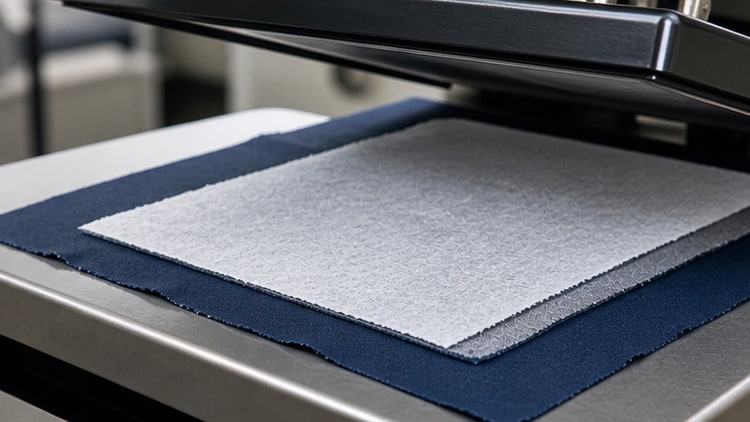
When stains or tacky marks repeat at regular intervals during fusible interlining pressing, inspect the belt, release sheet and feed direction before concluding that the interlining itself is defective. Adhesive strike-through to the shell surface and residue transferred from an earlier run can look similar but require different responses. Connecting defect shape, repeat interval, press position and cleaning history reduces unnecessary material changes and bulk rework.
Record the shape and repeat interval of the mark
A dot or line that returns at the same position with each belt cycle points toward localized machine-surface contamination. A broader mark that follows a fabric edge or adhesive-dot pattern calls for review of adhesive amount, press settings or the material combination. Mark feed direction, panel position and repeat interval on defect photos so they can be compared with belt circumference or roll section.
Distinguish adhesive strike-through from belt transfer
Adhesive strike-through can appear across a specimen or through particular construction openings because of the combined effect of temperature, pressure, dwell time, shell thickness and dot size. Belt transfer more often occurs when adhesive or soil from a previous panel remains on the press surface and moves to a fixed position on the next piece. Run separate small trials with a clean release sheet to identify the surface where the mark begins.
Check belt condition with a reference specimen before production
Before feeding the first bulk panel, make an idle or trial press with an approved reference fabric or a plain white release sheet. Compare contamination, gloss and pressure differences at the center and both edges, including the area around the belt joint. Repeat the check at shift start, shade changes, adhesive-system changes and after a long stop to detect an abnormal condition before production.
Control release sheets and feed width to limit contamination
Interlining that extends beyond the shell or repeated feeding of narrow panels on one side can increase exposed adhesive and localized belt loading. Check interlining cut size and panel alignment, and make sure the release sheet covers every area that may contact adhesive. When release sheets are reused, control the working face and reuse count so existing residue does not return to the garment panel.
Clean only within machine and safety instructions
Solvents or metal tools that are incompatible with the belt material and surface coating can create pressure variation and gloss marks more serious than the original soil. Follow the machine maker instructions for cooling, stopping, lockout and approved cleaning materials, and do not force hardened adhesive off with sharp tools. Record the cleaned location, material used, time and operator so a recurring defect can be traced.
Link restart approval with material and supplier information
Do not restart bulk work merely because cleaning is complete. Press reference specimens at the center and both sides, then confirm appearance and bond result. Identify the first production bundle for a second check after cooling and keep the material lot, press settings and belt history in one record. In a Korea and Vietnam supply network supporting GCC apparel production, shared defect photos and restart criteria help the fusible interlining supplier and garment factory reach a cause decision faster.
Practical checklist
- Mark feed direction, location and repeat interval on defect photos.
- Use a clean release-sheet trial to separate strike-through from belt transfer.
- Press a reference specimen around shift, shade or adhesive-system changes.
- Use cleaning materials and stop or cooling procedures approved for the machine.
- Complete center and edge trials and recheck the first bundle after cleaning.
Related products and consultation
Adhesive-dot size and press settings for fusible interlining should be evaluated together with belt condition, while base-sheet behavior can be compared among nonwoven interlining options. Share shell fabric, interlining lot, press model and photos of repeated marks through contact.
FAQ
Can transfer occur even when no mark is visible on the belt?
Yes. Clear or thin adhesive residue may be difficult to see at room temperature but can appear on the next panel under heat and pressure. A trial with a light reference specimen and release sheet is safer.
Should cleaning intervals be based only on operating hours?
Operating time alone is not enough. Adhesive system, exposed area, shade changes and defect history also matter. A practical schedule combines fixed intervals with the result of the pre-production reference check.