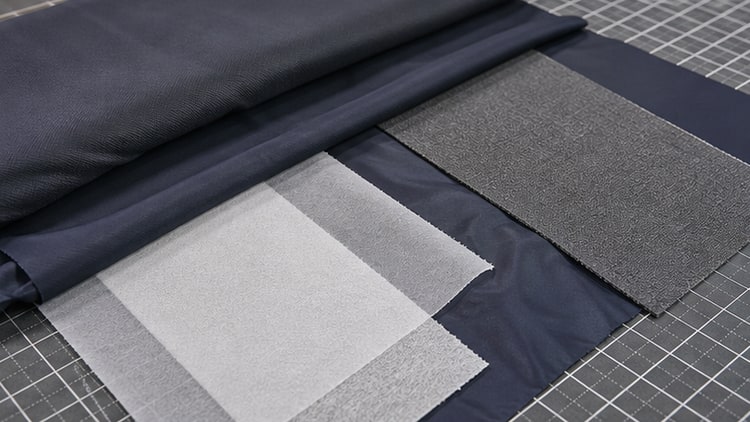

Pockets may look like a small detail, but they receive concentrated load from carried items and repeated hand movement. If pocketing construction, weight, opening reinforcement and seam allowance are not matched, sagging and seam distortion can appear quickly after production. Review samples with realistic use loads before approval.
Separate fabric and pattern causes of pocket sagging
Sagging is not caused only by lightweight or stretchy pocketing. Pocket depth, opening curve, seam direction and the weight difference from the shell also matter. Before changing fabric, apply candidate pocketing fabrics to the same pattern to isolate the cause.
Match construction and weight to carried items
A lightweight shirt pocket and a workwear or trouser pocket need different durability. Compare density and weight of constructions such as twill and plain weave against carried-item weight and rubbing frequency, and check that excessive thickness does not mark the shell.
Reinforce pocket openings and corners separately
Pocket openings and lower corners receive repeated pulling. When using garment tape or interlining reinforcement, review movement at the junction with the shell rather than making pocketing alone rigid. Excessive reinforcement can create lifting and stiffness at the opening.
Confirm sewing conditions on physical samples
Needle size, thread tension, stitch density and overlock method can change seam appearance even with the same pocketing. Pull the pocket opening repeatedly, then record broken thread, seam opening and shell wrinkling to clarify the specification choice.
Include shape after washing and load in approval criteria
A pocket that is flat initially can stretch at the opening after laundering and use. Apply realistic load to a sample washed under expected care conditions, then compare left/right pocket length and opening distortion. For repeat supply through a Korea and Vietnam textile material supply network, keep approval criteria and lot information together.
Practical checklist
- Define pocket use and expected load.
- Compare candidate pocketing fabrics on the same pattern.
- Check movement before and after opening/corner reinforcement.
- Record seam opening and shell wrinkles.
- Measure pocket-opening length again after laundering.
Related products and consultation
Test pocketing fabric and garment tape with the actual shell. Share application area and load conditions through contact.
FAQ
Can pocket sagging be solved by changing pocketing fabric alone?
Pocketing matters, but pocket pattern, opening reinforcement, sewing conditions and carried-item load should be reviewed together.
How can pocket durability be tested simply?
Place expected item weight in a sewn sample and compare seam and opening deformation after repeated pulling and laundering.