Even when delivered to the same specification, interlining, lining, pocketing and garment tape can develop pressure marks, contamination, edge damage or shape changes before cutting when storage and handling differ. Organizing the flow from receiving to cutting can reduce unnecessary loss and reinspection.
Check packing condition and roll information at receiving
At receiving, check not only quantity but also packing damage, moisture signs, compressed roll ends and the item, color and lot on labels. Photos and records of receiving condition make it faster to separate causes of issues found during production.
Avoid direct sun and moisture; keep rolls off the floor
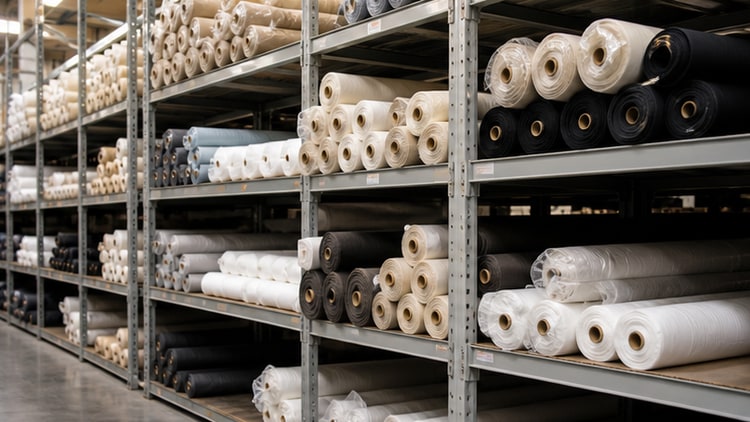
Direct sunlight near windows and floor moisture can affect color and packing condition. Store rolls on clean, dry racks or pallets and keep them from direct contact with walls and floors. Avoid abrupt temperature and humidity changes in the storage area.
Match stacking direction and height to material characteristics
Soft lining or lightweight interlining rolls can be sensitive to top pressure. Limit stacking height for long-term storage and choose horizontal or vertical orientation based on material and packing method so the core is not crushed.
Recheck edges and surface before cutting
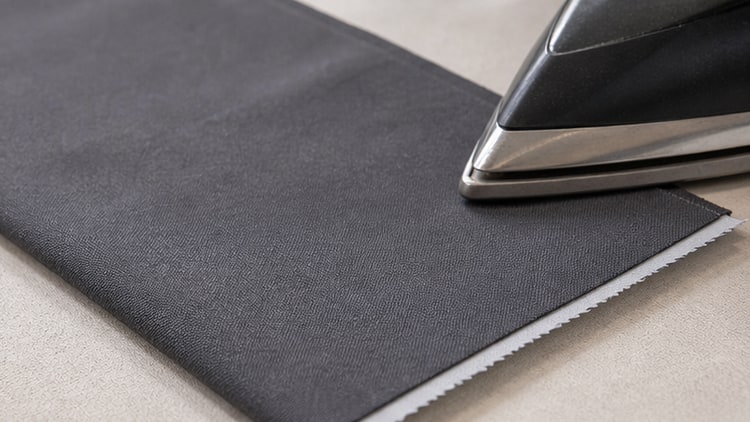
Before cutting, inspect compressed ends, surface contamination, fold marks and shade variation. Fusible interlining in particular can be affected by dust or moisture during storage, so check its condition with a small test piece before first use.
FIFO and lot management support repeat-order quality
FIFO use of earlier received rolls and lot-based location management reduce storage-time variation. For export deliveries to the GCC region, including UAE, Saudi Arabia and Qatar, where transit and storage may be longer, include packing condition and receiving records in material consultation.
Practical checklist
- Check packing, labels and roll ends at receiving.
- Store rolls on dry racks or pallets.
- Limit stacking height for long-stored rolls.
- Recheck surface and edge condition before cutting.
- Maintain FIFO and lot-based location records.
Related products and consultation
Review storage conditions for fusible interlining and lining fabric with the actual production schedule. Share delivery and packing requirements through contact.
FAQ
Is it acceptable to leave rolls on the floor temporarily?
Because of moisture and contamination risk, use pallets or racks whenever possible and keep unavoidable floor placement brief.
Can stored fusible interlining be used directly in production?
After checking storage time and conditions, it is safer to run a quick fusing and surface test with the actual shell before first use.