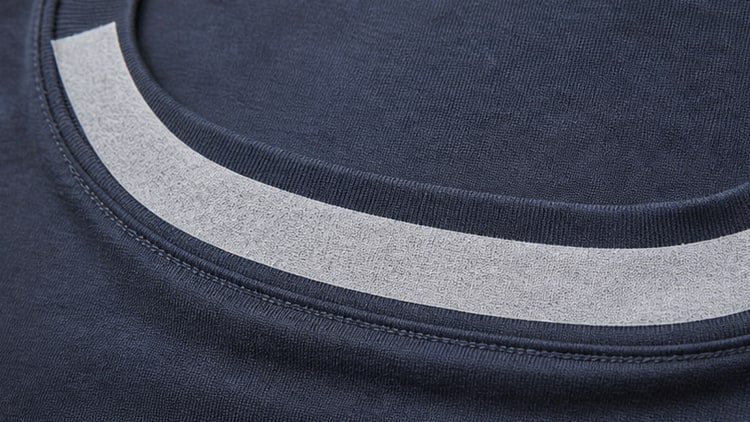
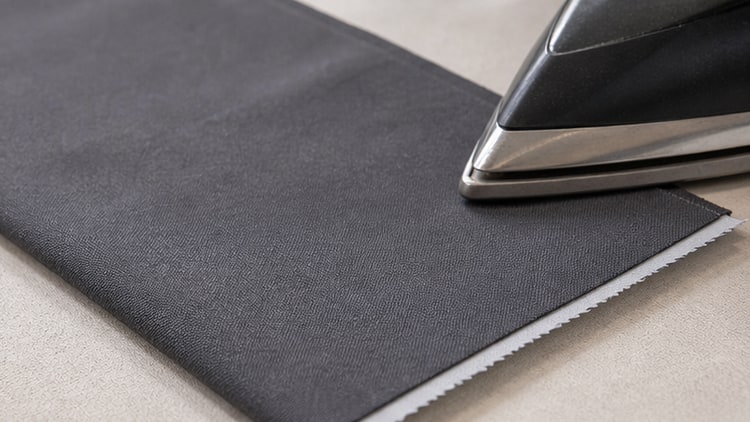
Visible adhesive dots or changed sheen after fusing are especially sensitive on thin and lustrous shells. Even the same interlining can perform differently with the shell, fusing condition, press cloth and cooling method, so repeat small tests on the actual shell before production.
Identify the pattern of marks and sheen change first
Dot-like strike-through, broad sheen change and edge marks can have different causes. To distinguish adhesive effect from surface compression by heat and pressure or contamination from a press cloth, use test pieces on the same shell while changing one condition at a time.
Choose interlining from shell thickness and surface character
On lightweight shells, adhesive dots and interlining surface character can show on the face. On lustrous shells, even slight compression is visible, so compare adhesive distribution and interlining smoothness as well as reinforcement strength.
Do not raise heat, pressure and time at once
If adhesion seems weak, raising heat, pressure and time together can worsen shell sheen or compression marks. Confirm actual press temperature, then adjust temperature, pressure and time one at a time while recording bond strength and face appearance.
Press cloth and cooling time are process conditions
A clean press cloth protects the surface, but an unsuitable material or condition can leave marks. Moving a piece while hot can destabilize the bond, so cool it sufficiently on a flat surface and inspect both face and back.
Record appearance criteria with the approval sample
If bond strength is the only pass criterion, subtle marks or sheen differences can be missed. Inspect the surface under daylight and indoor light and record acceptable appearance with the approval sample. For export samples supporting Middle East apparel production, physical swatches are more reliable than photos alone.
Practical checklist
- Make condition-specific test pieces with the actual shell.
- Adjust heat, pressure and time one at a time.
- Inspect face-side dots and sheen under different lighting.
- Maintain press-cloth cleanliness and condition.
- Record bond strength and appearance after cooling.
Related products and consultation
Compare fusible interlining and woven interlining candidates on the actual shell. Fusing-condition consultation is available through contact.
FAQ
Will a thinner interlining always eliminate marks?
It may help, but adhesive distribution, shell surface and fusing condition also contribute. Confirm with tests on the actual shell.
How should lustrous fabric be inspected?
Inspect at multiple angles under daylight and indoor light, comparing the same area before and after fusing for compression and sheen differences.