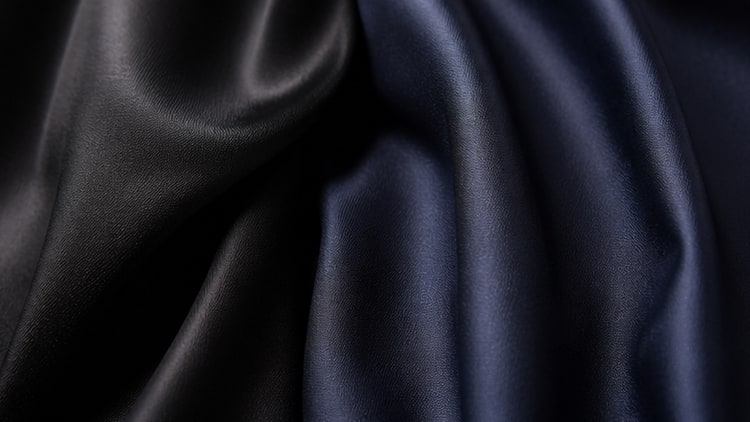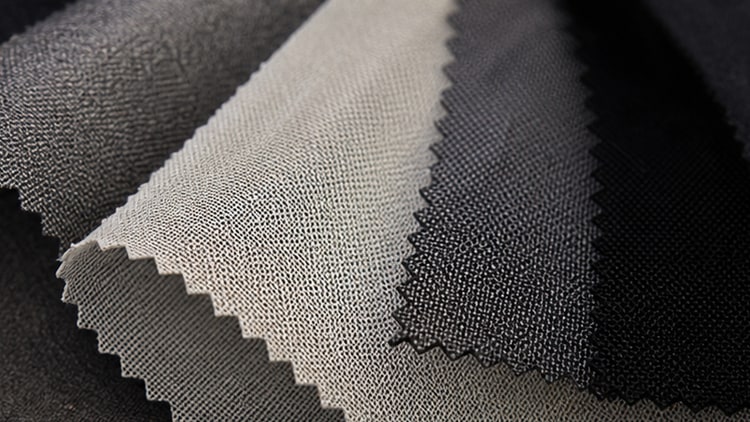
Many lining fabrics use light, smooth filament constructions, so a seam that looks normal at first can develop larger holes after wear or washing when the needle has cut or displaced yarns. Needle holes, pulled yarns and heat-related melting are also more visible on lustrous surfaces. Classify the defect first, then change needle point and size, thread, stitch density, tension and sewing speed one condition at a time.
Separate needle cutting, yarn displacement and heat damage
Needle cutting appears as broken yarns, a small crack or fuzz around the seam, while yarn displacement leaves intact yarns pushed away from a hole that transmits light. Heat damage can melt or harden synthetic fiber ends and may include discoloration. Inspect the seam immediately after sewing and while gently opened, using magnification to record whether the defect aligns with needle penetration points.
Match needle point and size to the fabric construction
A fine needle can pass between yarns in a dense woven lining, but an excessively fine needle may deflect or break at multilayer seam allowances. Point geometry, including round and sharp points, behaves differently by construction and surface treatment, so compare options on the actual lining. Record manufacturer system, point shape and replacement timing as well as needle size in the work standard.
Check wear, burrs and needle heat during the shift
When a new needle sews cleanly but holes increase after a production quantity, suspect point wear, a small burr or accumulated heat. A damaged needle cuts yarns instead of moving between them, and a hot needle can melt synthetic lining at high speed. Inspect intermediate specimens by quantity, speed and elapsed time, then replace the needle immediately and isolate the affected interval when an abnormality appears.
Balance thread size, tension and stitch density
Heavy thread and high tension can enlarge stitch holes, while excessive stitch density can create a perforation line. Tension that is too low causes loops and unstable seams. Within the required appearance and strength range, balance thread size with upper and bobbin tension, then compare needle penetrations over a fixed seam length to determine the least damaging condition.
Test actual seam thickness and curved areas
A setting that passes on one flat ply can still deflect the needle or drag the lining where shell, interlining and seam allowances overlap. Assemble curved or changing-thickness areas such as sleeve caps, armholes and hems in the actual order, comparing low-speed start with normal production speed. Also check whether presser-foot pressure, feed imbalance or operator pulling adds damage.
Connect post-care inspection with supply criteria
Minor needle cutting may become clearer after washing or simulated wear than immediately after sewing. Process the approval specimen under the target care condition, then open the seam and recheck hole growth, yarn pulls and discoloration. For garments supplied to the UAE, Saudi Arabia or Qatar, communicating actual care and sewing conditions to the lining fabric supplier creates reproducible criteria for GCC production without relying on location labels alone.
Practical checklist
- Classify needle cutting, yarn displacement, pulls and heat damage separately.
- Record point shape, needle system and replacement time as well as size.
- Compare thread size, tension and stitch density one condition at a time.
- Test actual shell, interlining, seam layers and curved assemblies.
- Recheck hole growth immediately after sewing and after target care.
Related products and consultation
Lining fabric should be compared by needle damage under actual sewing conditions as well as construction and sheen. Where seam or curved-area reinforcement is required, also check how garment tape changes thickness and needle penetration. Share lining samples, needle and thread specifications, and defect photos through contact.
FAQ
Does a finer needle always reduce visible stitch holes?
Not always. An excessively fine needle can deflect in a thick seam and increase friction or cutting. Test both a single ply and the real assembly to select the size that creates the least damage.
Can care testing be skipped when no hole is visible immediately?
It is safer not to skip it because slightly cut yarns can open after washing and repeated movement. Inspect the same seam again under magnification after the target care condition.