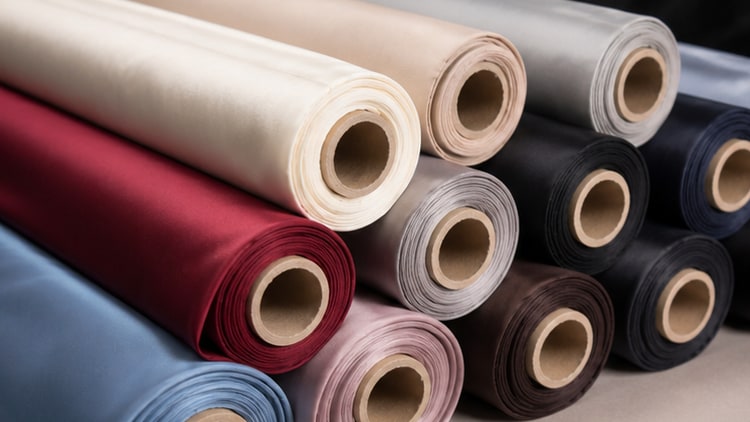
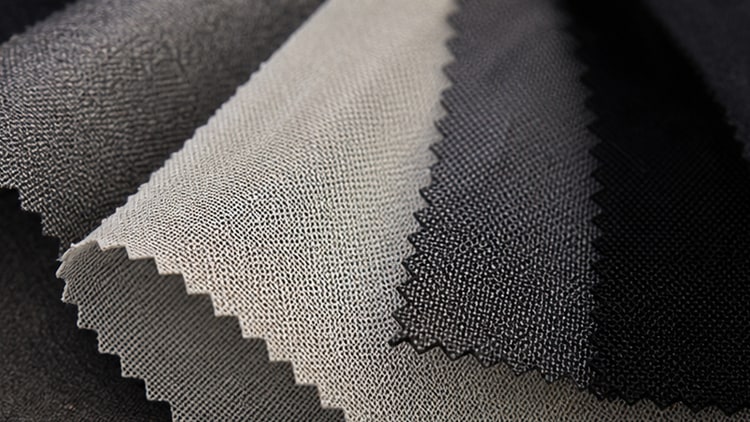
Fabric blend directly affects interlining and lining selection. Polyester, cotton, rayon and wool blends react differently to heat, shrinkage, hand feel and show-through, so the same fusible interlining or lining fabric can produce different results. Using blend information as a test guideline helps reduce unnecessary trial and error.
Polyester blend fabrics
Polyester blend fabrics are generally easy to care for, but gloss change and press marks from heat should be watched carefully. For fusible interlining, stable pressure and time are often more important than excessive temperature. For lining fabric, static and friction should be reviewed together.
Cotton blend fabrics
Cotton blends have a natural hand feel but may show washing shrinkage and wrinkles. Select interlining options with low shrinkage difference, and check color and hand-feel changes of lining or pocketing fabric after repeated washing.
Rayon and viscose blend fabrics
Rayon and viscose blends offer soft drape but can be sensitive to moisture and heat. Excessive interlining may reduce natural flow, and lining color or surface can affect the final look, so movement in a fitting sample should be checked.
Wool and heavier blend fabrics
Wool or heavier blends require shape retention, but overly stiff interlining can make the garment feel heavy. For jackets, coats and uniform outerwear, woven interlining and fusible interlining can be reviewed by garment area.
When blend information is not available
If exact blend information is unavailable, first observe thickness, stretch, show-through and heat response. Run fusing and washing tests on small samples, then narrow the options based on stable results.
Practical checklist
- Collect blend, thickness and stretch information first.
- Check surface marks and hand-feel changes before and after pressing.
- Compare shrinkage difference between shell fabric and interlining after washing.
- For light fabrics, check lining color and show-through under different lighting.
- Before bulk production, reconfirm the approval sample under the same conditions.
Related products and consultation
For blend-based material review, nonwoven interlining, woven interlining, fusible interlining and lining fabric can be compared together. Send fabric information through the contact page for suitable test direction.
FAQ
Is fabric blend alone enough to choose interlining?
Fabric blend is important, but thickness, construction, finishing and care condition should also be reviewed. Final selection should be confirmed through actual sample testing.
What lining should be checked first for light-colored fabrics?
Color matching, show-through, sheen and static should be checked first. It is safest to review the lining with the shell fabric under both natural and indoor light.