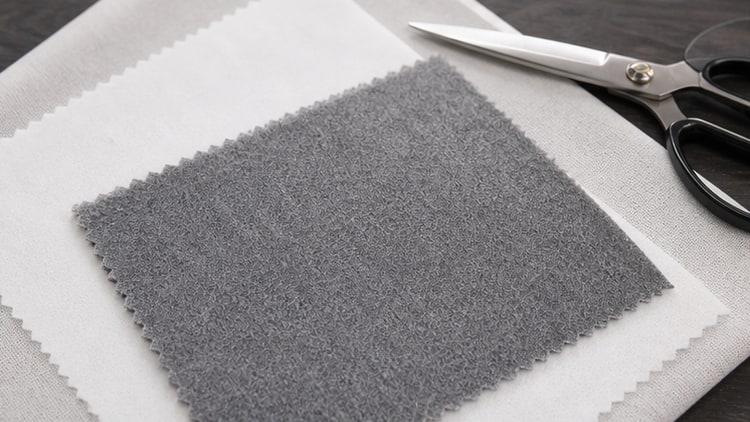
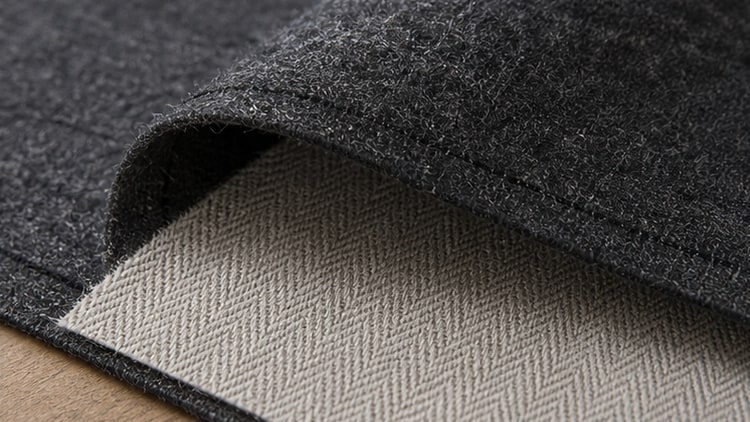
nonwoven interlining는 셔츠, 재킷, 코트, 유니폼 등 다양한 의류에 사용되는 대표적인 보강 자재입니다. 비교적 균일한 품질과 폭넓은 적용성이 장점이며, 제품 목적에 따라 두께와 중량을 선택해야 합니다.
thickness and weight
Using an interlining that is too thick for a thin fabric may result in a stiff fit, while using an interlining that is too weak for a thick fabric may not provide enough shape stabilization. Both the shell fabric and the feel of the finished product must be considered.
Adhesion conditions
fusible interlining로 사용할 경우 온도, 압력, 시간 조건이 중요합니다. 원단 특성과 후가공 상태에 따라 접착 결과가 달라질 수 있으므로 생산 전 테스트가 필요합니다.
Color and application area
- Bright fabric: review of white interlining
- Dark fabric: review black or dark series
- Collar/Cuffs: Focus on maintaining shape
- Front/lapel: Balanced silhouette and fit
Related products are nonwoven interlining You can check it on the page.
nonwoven interlining를 고를 때 흔히 생기는 문제
nonwoven interlining는 적용 범위가 넓지만, 잘못 선택하면 완제품이 지나치게 뻣뻣해지거나 반대로 형태가 충분히 잡히지 않을 수 있습니다. 특히 얇은 원단에는 심지의 두께와 촉감이 바로 드러나기 때문에, 단순히 강한 사양을 고르기보다 겉감과의 균형을 봐야 합니다.
Detailed conditions to review
- weight: It affects the shape retention and fit of the finished product.
- thickness: You should check the change in hand feel after using the shell fabric and synthetic fabric.
- color: Check for transparency on light fabrics and color matching on dark fabrics.
- Adhesive Resin: This may affect adhesive stability and retention after washing.
- Width and Supply Form: It is linked to cutting efficiency and cost.
Sample Test Method
After adhering the interlining to the actual production fabric, after cooling, check by hand for delamination, and check for bending and wrinkling. If possible, it is recommended to test washing or dry cleaning conditions to check for shrinkage and deformation.
Frequently Asked Questions
nonwoven interlining는 어떤 의류에 가장 많이 쓰이나요?
Used in a variety of clothing including shirts, jackets, coats, uniforms, etc. This is especially good to review if specifications stability and high volume productivity are required.
Which color should I choose: white or black?
The decision is made based on the shell fabric color and whether or not it is transparent. We first consider white for bright fabrics, and black for dark fabrics.
Related product: nonwoven interlining · fusible interlining