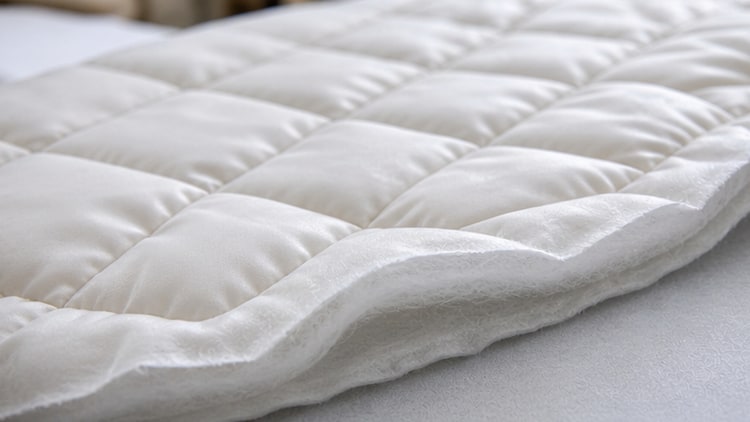
Garment padding can show different clumping, migration and loft loss after washing even at the same weight, depending on fiber bonding and quilting. Beyond the first sample appearance, review recovery after compression and laundering to manage comfort and insulation consistently.
Clumping starts with the combination of fill and fixation
Fiber length, bonding density and surface friction can make fill migrate when they are not matched. Wide quilting intervals or uneven stitching can also increase movement, so material specification and pattern should be reviewed together.
Do not judge insulation and volume by weight alone
Weight in g/m² is a useful starting point, but identical figures can perform differently when thickness and air retention differ. Define the intended silhouette, shell weight, lining friction and use environment, then compare candidates in the actual construction.
Test quilting interval and sewing conditions together
Wider quilting can preserve loft but may increase fill migration, while overly close quilting can create compression marks and stiffness. Check clumping at edges and intersections with needle size, thread tension and sewing speed included.
Check recovery after laundering and compression
Test a finished sample under its expected care condition, dry it flat and compare thickness and appearance with the initial state. If packing or transit compression is expected, record recovery speed after a defined compression period.
Record approval criteria with measurements and samples
Recording acceptable thickness change, clumping location, quilting interval and wash cycles makes repeat-order decisions faster. For deliveries supported through a Korea and Vietnam textile material supply network, also confirm repeat availability of the same specification.
Practical checklist
- Record weight and thickness over the same reference area.
- Inspect quilting interval and stitch intersections together.
- Compare clumping and loft after care with the initial sample.
- Record recovery time after compression with packing conditions.
- Keep the approved sample and lot information.
Related products and consultation
Review padding material with lining fabric against the actual shell. Share production conditions through contact.
FAQ
Is some loft loss after washing normal?
Some change can occur by material and care condition, but localized clumping or major thickness variation calls for retesting the specification and quilting.
Does closer quilting eliminate clumping?
It may reduce migration, but can change compression and appearance. Compare it with the target loft and sewing conditions.