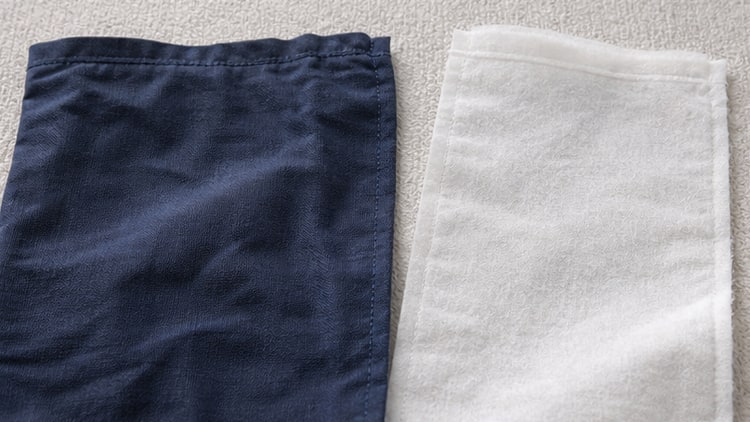
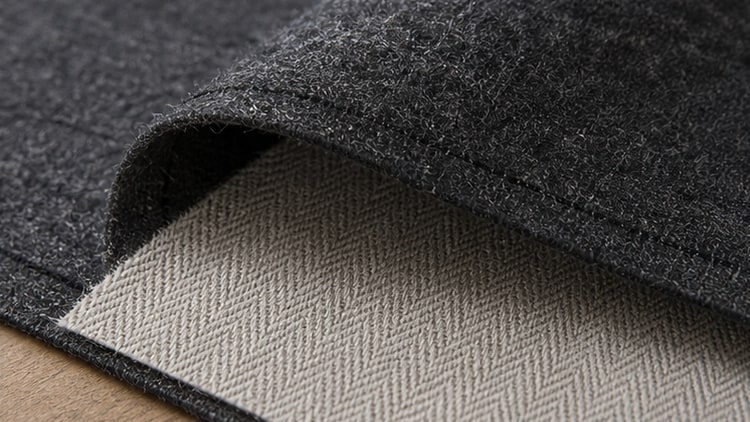
코트와 자켓은 옷의 실루엣이 품질 인상을 좌우하는 품목입니다. 같은 겉감이라도 앞판, 라펠, 칼라, 밑단에 어떤 심지를 쓰느냐에 따라 착장감과 형태 유지가 크게 달라집니다. woven interlining는 안정적인 형태감이 필요한 부위에서 많이 쓰이지만, 원단 두께와 봉제 구조에 맞지 않으면 부위가 과하게 딱딱해지거나 프레스 자국이 생길 수 있습니다.
코트·자켓에서 woven interlining를 쓰는 이유
woven interlining는 방향성과 조직 안정성이 있어 앞판이나 라펠처럼 형태를 잡아야 하는 부위에 적합합니다. nonwoven interlining보다 원단과 함께 움직이는 느낌이 자연스러운 경우가 많고, 두꺼운 겉감에서도 필요한 보강감을 만들기 쉽습니다.
Checking shell fabric weight and thickness
Different shell fabrics such as wool blends, polyester blends, twill and melton react differently to the same interlining. Heavy fabrics require enough adhesive penetration and pressure transfer, while lighter jacket fabrics show edge ridges and hand-feel changes more easily.
Adjusting reinforcement by garment area
The front body, lapel, collar, pocket opening and hem all need different reinforcement levels. Using one interlining weight everywhere may simplify production but can reduce comfort and visual balance. Review weight, adhesion strength and cutting direction by garment area.
Checking silhouette after fusing
Looking only at the flat fused sample can miss issues that appear when the garment is worn. Check the lapel roll line, the flow from shoulder to front body, and pulling around buttons in a sewn sample.
Laundry and dry-cleaning conditions
Coats and jackets are often dry-cleaned, but uniform and workwear jackets may require repeated washing. For uniform jackets supplied to the Middle East or GCC region, care conditions can vary, so it is safer to confirm laundry requirements during material consultation.
Practical checklist
- Compare two or three interlining weights based on shell fabric thickness and blend.
- Review reinforcement separately for the front body, lapel, collar and pocket opening.
- Check both flat fused samples and sewn fitting samples.
- Record delamination and shape change after dry cleaning or repeated washing.
- Before mass production, confirm button closure, lapel roll and hem flow on an approval sample.
Related products and consultation
For coats and jackets, woven interliningand fusible interliningcan be reviewed together. Share the shell fabric sample and application area through the contactpage for suitable material guidance.
FAQ
코트에는 항상 두꺼운 woven interlining가 좋은가요?
Not always. Thick interlining improves structure but can add weight, create ridges and reduce comfort. It is better to find the minimum reinforcement needed for the shell fabric and garment area.
What should be checked first if a jacket front panel puckers?
First check uneven press pressure, shrinkage difference between shell fabric and interlining, and interlining cutting direction. Sewing sequence and finishing pressing can also affect front panel puckering.