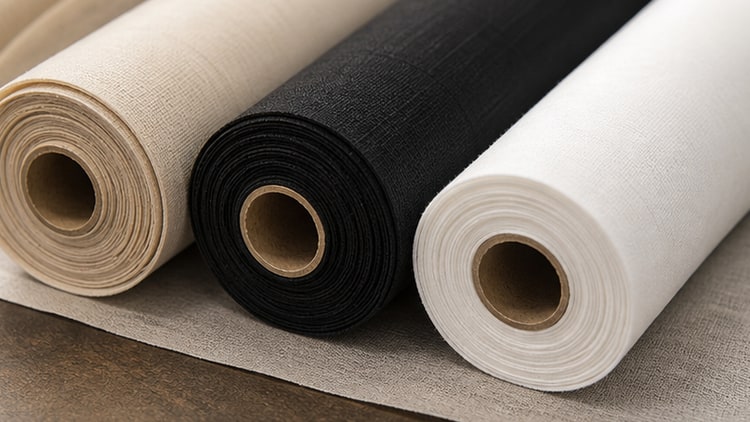
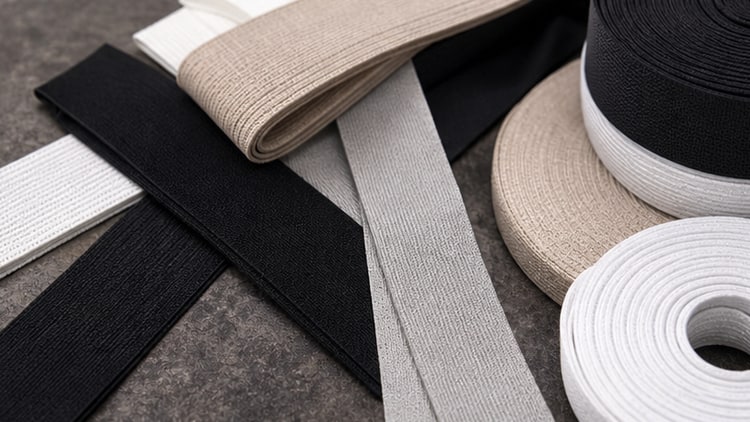
Garment tapes used for stabilization and tapes designed to allow controlled stretch require different criteria. Maximum force alone does not define a suitable tape; elongation at the working load and recovery after unloading are equally important. Defining the garment area and stitched construction first helps prevent excessive tightness, sagging and permanent growth after repeated wear.
Separate stabilization and elastic-tape objectives
Shoulder-seam or pocket-opening reinforcement usually prioritizes low elongation and shape retention, while waist or cuff applications need controlled extension and recovery. The same result can pass or fail depending on the function, so state the intended performance and target range in the work specification first.
Standardize test direction and gauge length
Woven and knitted tapes behave differently along their length and width, and cutting angle or edge construction can affect the result. Prepare specimens in the actual sewing direction and keep width, gauge length and grip spacing consistent. If slippage occurs, record grip marks and the location of failure.
Distinguish maximum strength from working-load behavior
Maximum force before break indicates safety margin, but garments experience repeated loads well below that level. Record elongation at the intended working load and identify any sudden extension or structural damage point. For a firm reinforcement tape, controlling extension at low load may matter more than ultimate strength.
Measure residual growth after cyclic extension
Recovery after one extension can differ from recovery after repeated cycles. Cycle the tape to a defined elongation or load, then measure length immediately and again after a set relaxation period. High residual growth can lead to gradual sagging at a neckline, waistband or pocket opening.
Check thread and needle effects in the stitched assembly
A tape-only test does not reflect seam restraint or needle damage. Add tensile and repeated-flex testing on an assembly made with the actual shell, stitch direction, stitch density and seam allowance. Inspect whether tearing follows needle holes or thread tension locks the tape in a pre-extended state.
Compare dimensions and recovery after care
Washing and heat drying can shrink a tape or reduce elasticity, causing shell puckering or loose reinforcement. Measure free length, elongation at working load and residual growth before and after care using the same method. For workwear used in Middle East apparel production, specifications should follow actual wear and care conditions rather than location labels alone.
Practical checklist
- Define whether the tape provides stabilization or elasticity and identify the garment area.
- Standardize specimen direction, width, gauge length and grip conditions.
- Record ultimate strength separately from elongation at working load.
- Compare residual growth immediately after cycling and after relaxation.
- Retest the actual stitched assembly and specimens after care.
Related products and consultation
A suitable garment tape should be assessed both alone and in a stitched shell assembly. Review pocket-opening reinforcement with the pocketing fabric construction, and neckline or shoulder tape with shell stretch. Share tape width, target elongation, care method and production location through contact with a garment tape supplier.
FAQ
Is a higher-strength tape always better for reinforcement?
No. A tape that is too rigid can restrict shell movement and cause puckering or drag around the seam. Match the working load with the flexibility required in the garment area.
Can recovery be checked with a single extension?
A single extension can support an initial comparison, but it is not enough to predict repeated wear. Compare length immediately after multiple cycles and after relaxation to assess permanent growth risk.