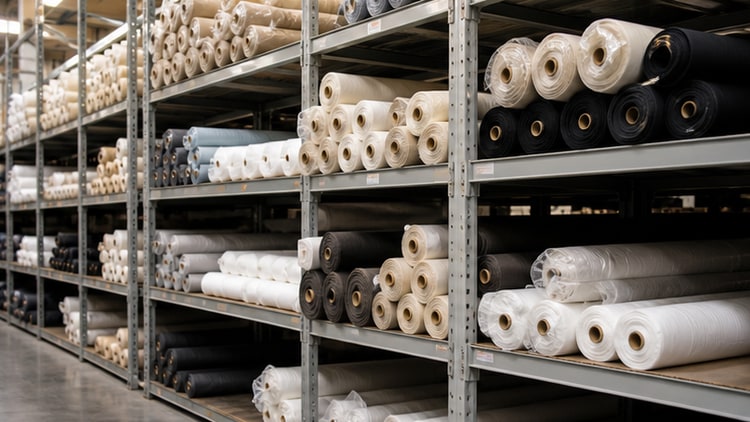
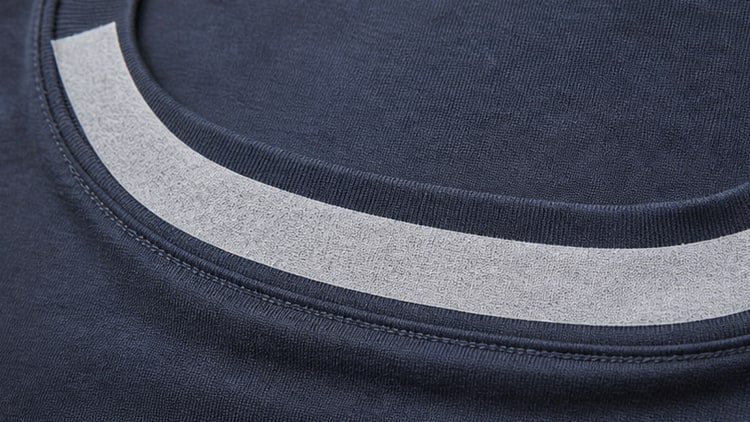
Knit fabrics have more stretch and recovery than woven fabrics, so the wrong interlining can make a garment area too stiff or cause puckering, twisting and bubbles after sewing. Interlining selection for knit garments should consider not only adhesion but also stretch, recovery and comfort.
Why knit fabrics need separate criteria
Knit structures move and stretch. If a rigid interlining is applied, the shell fabric stretches while the interlining resists movement, which can cause surface puckering. Even in reinforced areas, the interlining should be able to follow the fabric movement to some degree.
Application points by garment area
Front edges, plackets, shoulders, necklines and pocket openings all require different reinforcement levels. Necklines need stretch control, while front edges need appearance and sewing stability. Even on the same knit fabric, using different interlining weights or widths by area is often safer.
Press temperature and fabric distortion
Knit fabrics can lose width or show surface flattening under heat and pressure. Before increasing fusing temperature, check adhesion under lower conditions and record dimensional and hand-feel changes after pressing. Stretch-blend fabrics require extra care because twisting can appear during heat recovery.
What to check in sample testing
It is useful to check samples immediately after fusing, after 24 hours and after washing. Looking only at the immediate result can miss bubbles or lifting that appear later as stress differences between the fabric and interlining become visible.
Practical checklist
- Check changes in horizontal and vertical stretch after fusing.
- Record width loss, twisting and sheen changes before and after pressing.
- Review tape or interlining width separately for necklines and shoulder seams.
- After washing, check not only bubbles and delamination but also whether the hand feel became too stiff.
- Test under the same sewing sequence as mass production.
Related products and consultation
For knit fabrics, both nonwoven interliningand woven interliningcan be reviewed depending on the application area. Share the fabric blend and sample conditions through the contactpage for suitable material guidance.
FAQ
Do knit fabrics always require stretch interlining?
Not always. The choice depends on whether the area needs shape stability or needs to follow fabric movement. However, changes in fabric stretch must always be checked.
Are bubbles on knit garments always an interlining problem?
It may be an interlining issue, but fabric finishing, uneven press pressure and insufficient cooling after fusing can also cause bubbles. Repeat small sample tests under controlled conditions to isolate the cause.