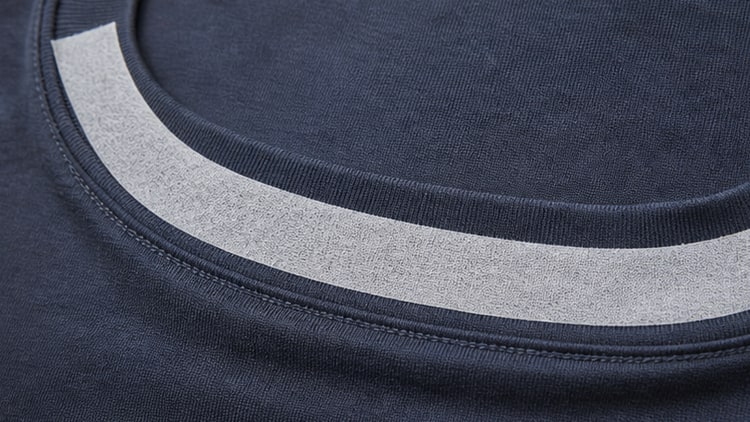
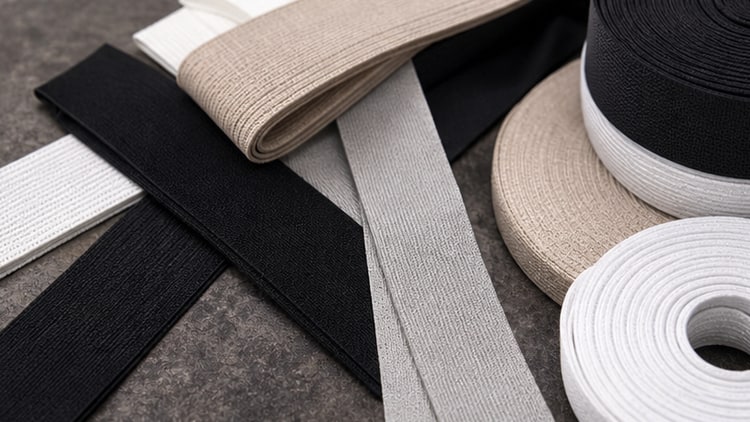
Garment tape with the same nominal width can look narrower when measured under tension, and curled edges after unwinding can reduce usable sewing width. Side bow and lengthwise twist also affect guide tracking and stitch-line position in different ways. Tension-free conditioning, position-based roll measurements and an actual feed trial are needed to separate material variation from process tension.
Standardize measurement without applied tension
Measuring tape while pulling it by hand produces operator-dependent results. Place a defined length naturally on a flat surface, allow the specified relaxation period, then measure width and curl without forcing it flat. Record temperature and humidity, relaxation time, specimen length and measuring tool so supply-lot and production-line results can be reproduced.
Measure several points at the beginning, middle and end
Passing the roll beginning alone can miss slitting variation in the middle or tension changes near the end. Take specimens from the beginning, middle and end and repeat width measurements at fixed intervals within each specimen. Record minimum and maximum values and the continuous out-of-specification length, not only the average, to assess cutting loss and sortable quantity.
Evaluate edge curl, side bow and twist separately
Edge curl is the inward or outward rolling of one or both edges, side bow is lateral curvature of the tape centerline on a flat surface, and twist is rotation of the face along the tape length. Even at the same measured width, these conditions affect guide escape, seam puckering and effective reinforcement width differently, so keep separate numeric and photo records.
Inspect edge construction and slitting condition
Small width variation can still create feed problems when edge yarns are cut or loose, changing friction and leaving debris outside the stitch line. Compare edge fuzz, heat-sealed hardness, adhesive projection and construction density on both sides. Hand-rub yarn loss and damage after guide passage help distinguish a cosmetic issue from a production risk.
Run an actual guide and presser-foot feed trial
A tape that passes flat measurement can still track to one side or stretch in the guide, shifting the stitch position. Test straight and curved sections with the actual guide width, presser-foot pressure, feed speed and target stitch density. Compare length before feeding and after sewing, and record side allowance, puckering, twist and recovery.
Connect roll and lot traceability with supplier disposition
Removing one bad section does not justify accepting an entire roll when the issue may repeat elsewhere in the lot. Record roll number, sampling position, width range and curl direction, and separate quantities for sorting, replacement or conditional use. In a Korea and Vietnam supply network serving the UAE, Saudi Arabia, Qatar and the wider GCC region, shared measurement conditions and roll maps reduce disposition differences between the garment tape supplier and sewing factory.
Practical checklist
- Condition tape without pulling before measurement.
- Record minimum and maximum width at multiple points from roll beginning, middle and end.
- Evaluate edge curl, side bow and lengthwise twist separately.
- Compare slitting fuzz, broken yarns and adhesive projection on both edges.
- Run straight and curved feed trials with the actual guide, foot and speed.
Related products and consultation
Width and edge stability of garment tape should be confirmed at the actual reinforcement location and feed setting. Also compare how the thickness and friction of the accompanying lining fabric affect guide passage. Share target width, roll number, measurement sheet and sewing-trial photos through contact.
FAQ
Should tape width be specified under tension or at rest?
Follow the tension-free or standard-tension condition stated in the specification. For elastic tape, define applied tension and elongation as well, and verify effective width after sewing separately.
Can curled edges simply be pressed flat before use?
Curl may return after cooling, and heat can change elongation or adhesive behavior. Do not accept the tape through unapproved pressing unless recovery and sewn appearance have been verified under an approved heat condition.