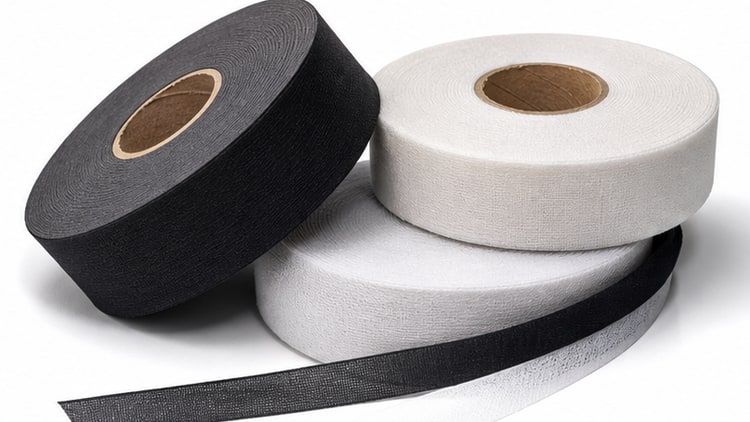
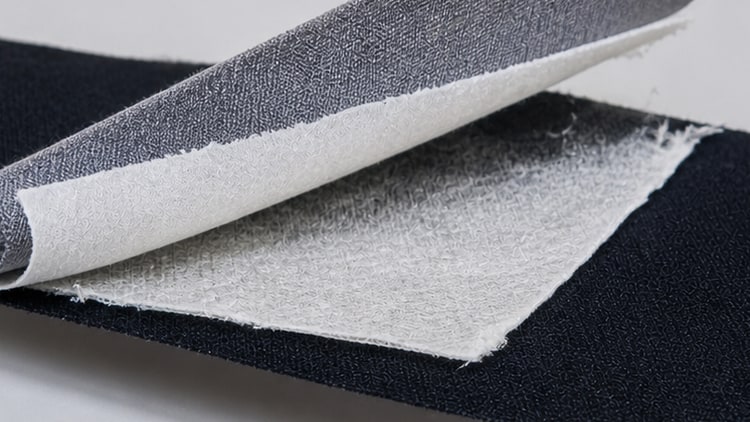
fusible interlining는 프레스 직후에는 문제가 없어 보여도 세탁 후 들뜸, 기포, 가장자리 박리가 나타날 수 있습니다. 이런 문제는 단순히 접착력이 약해서가 아니라 원단 수축, 프레스 조건, 접착제 종류, 세탁 방식이 함께 맞지 않을 때 발생합니다. 이 글은 의류 생산 전 fusible interlining 세탁 안정성을 확인하는 기준을 실무 관점에서 정리한 자료입니다.
Main causes of delamination after washing
The most common cause is an incorrect balance of temperature, pressure and dwell time. If the temperature is too low, the adhesive does not melt enough. If pressure is weak, the adhesive cannot penetrate the fabric structure evenly. Excessive temperature or dwell time can also shrink the shell fabric or change its surface, weakening the bonded area.
Why fabric and interlining shrinkage must be checked together
If the shell fabric and interlining shrink at different rates, one layer pulls against the other after washing, causing delamination or wrinkles. For shirts, uniforms and workwear that are washed repeatedly, test the fused composite, not only the shell fabric.
Recommended sequence for checking fusing conditions
Start with the supplier’s recommended fusing condition and prepare small samples. Then adjust temperature and dwell time according to the production fabric’s weight, construction and finishing. Let the sample cool and stabilize before checking peel strength and surface changes.
Test points by washing condition
Home laundering, industrial washing and dry cleaning place different stress on the fused area. Test according to the actual care conditions of the delivered garment, including wash temperature, spin strength, drying and post-pressing. For uniforms exported to the Middle East or GCC region, it is safer to confirm local care practices during material consultation.
Practical checklist
- Check both shell fabric shrinkage and shrinkage after fusing.
- Confirm whether the actual press surface temperature matches the displayed temperature.
- Allow stabilization time before running a peel test.
- Record color, sheen, hand feel, bubbles and edge lifting before and after washing.
- Make approval samples under the same conditions as mass production.
Related products and consultation
If fusing conditions need to be checked, Lantor Bontex can review shell fabric, washing method and production volume based on its fusible interlining range. Sample requests are available through the contact page.
FAQ
Can correct fusing conditions completely prevent delamination after washing?
Fusing conditions are essential, but they are not the only factor. Fabric shrinkage, finishing, washing method and adhesive characteristics must work together, so a wash-tested sample is necessary.
What should be checked first when only the edge lifts after washing?
First check insufficient edge pressure, uneven press plate pressure and shrinkage difference between the shell fabric and interlining. For areas that need edge reinforcement, review the interlining specification and cutting direction as well.