
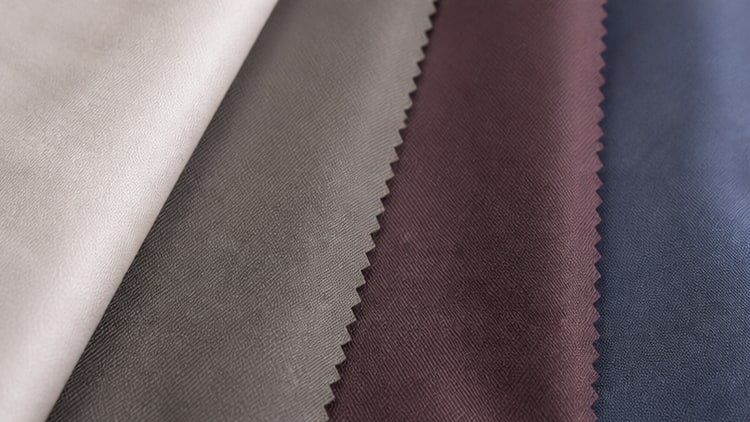
Many lining fabrics are light and slippery, so a panel that looks accurate immediately after cutting can lose seam allowance as the edge frays during bundling and sewing. Loose yarns can catch on the presser foot or another panel, causing pulled yarns, distorted seams or local holes. Construction, blade condition, lay control, seam design and bundle handling should be reviewed as one process to reduce cutting loss and sewing rework.
Distinguish edge fraying from pulled-yarn damage
Edge fraying occurs when warp or weft yarns escape from the cut and reduce seam allowance, while a pulled yarn creates a long line or pucker across the surface. Cutting lint and a hard fused edge from hot cutting should also be recorded separately. Clear classification helps determine whether the response should be blade replacement, handling improvement, overlocking or binding.
Check construction density and yarn-slippage risk
Open plain weaves and smooth filament yarns can shift easily at a cut edge, while lustrous finishes may make minor snags more visible. Gently pull edge yarns in warp and weft directions to compare the released length, and check whether the construction opens near the intended seam line. Fabrics of the same weight can fray at different rates because of construction and finishing.
Match blade condition and cutting method to the fabric
A dull blade fails to cut yarns cleanly and can drag the panel, creating the starting point for a pull. For straight knives, band knives and automated cutters, check blade damage, travel speed and vacuum pressure, then compare the first and last ply of the test lay. Heat cutting may seal synthetic fibers, but it should be approved only after checking for hard edges, discoloration and reduced sewability.
Reduce lay height and inter-ply slippage
When slippery lining is stacked too high, upper plies may move with the blade while lower plies compress, changing cut angle and seam allowance between panels. Use paper underlay, vacuum and low-damage weights, and reduce lay height according to trial results. Deep or sharp pattern notches can initiate fraying, so notch depth should be adjusted as part of the same trial.
Provide safety margin in seam allowance and edge finishing
Even when initial seam allowance meets the pattern, losing several yarns while panels wait for sewing can place the needle in a weak edge. Measure fray loss together with stitch-line position to set seam allowance, stitch density and the need for overlocking or binding. Rather than simply widening the allowance, also check for bulk and show-through in the finished garment.
Control bundle movement and pre-sewing condition
Tight rubber bands and rough baskets can catch edge yarns or crease cut panels. Keep panels aligned and flat, move them with protective paper or smooth trays, and cover bundles that wait for long periods. For lining fabric panels transported for Middle East apparel production, packaging trials should reflect actual friction, compression and humidity rather than distance alone.
Practical checklist
- Record edge fraying and pulled-yarn behavior separately in warp and weft directions.
- Check blade damage, vacuum and travel speed before trial cutting.
- Overlay the first and last plies to assess movement and seam-allowance variation.
- Set seam allowance, notch depth and edge finishing according to measured fray loss.
- Protect bundles on smooth, flat supports and recheck them before sewing.
Related products and consultation
The construction and surface finish of lining fabric should be compared together with cut-edge stability. When local reinforcement or edge control is required, also assess how garment tape affects drape and show-through. Share the lining sample, pattern allowance and cutting conditions through contact.
FAQ
Can heat cutting prevent all lining-edge fraying?
It can help with some synthetic fibers, but it is not suitable for every lining. A fused edge may become hard or cause discoloration, gloss and needle damage, so approval requires an actual sewing trial.
Will a wider seam allowance also solve pulled-yarn problems?
Extra allowance can protect a stitch line weakened by fraying, but it does not remove the cause of pulls created by the blade or handling. Cutting and bundle movement conditions should be corrected first.