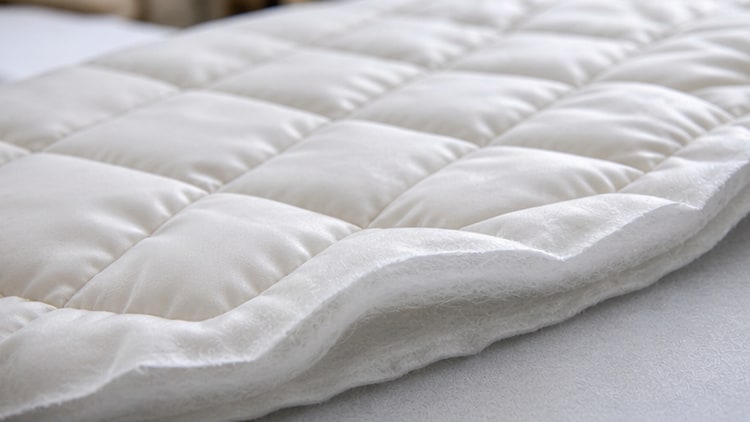
Garment padding with the same weight and thickness can behave differently depending on fiber bonding and recovery. Quilting that is too widely spaced may allow the layer to shift during wear and washing, while overly dense quilting can compress loft and reduce insulation. Before bulk production, prepare samples using the actual pattern, sewing equipment and care conditions rather than reviewing appearance alone.
Start with padding construction and thickness
Required fixing distance changes according to whether the padding is a stable bonded sheet or a more loosely held batting. Check thickness before and after compression, observe layer movement when handled, and measure the sewn thickness together with shell and lining. Thick assemblies can also create presser-foot pressure and feed differences.
Balance loft retention and migration control in quilting spacing
Quilting spacing should reflect panel size, seam layout and garment movement rather than one padding-only number. On broad body panels, check center migration; on sleeves and hoods, inspect folding and recovery around curves. Sew two or three spacing options, then compare thickness and appearance before and after care.
Set needle, thread, stitch density and feed together
A heavy needle or excessive stitch density can compress padding and mark the shell, while insufficient stitch density can destabilize curved seams. On production equipment, vary needle size, thread weight, stitch density, presser-foot pressure and layer feed together, then inspect seam flatness and loft recovery.
Test edges and curved areas separately
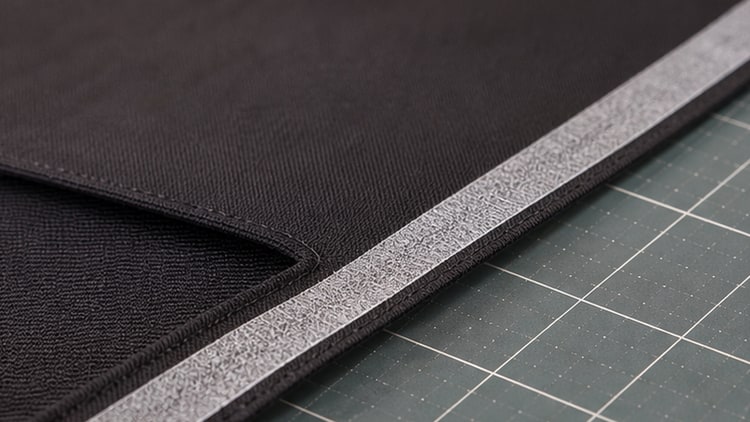
Armholes, collars, hoods and pocket areas are more prone to shifting than flat quilted panels because of cut edges and curvature. Define how much padding to trim inside the seam allowance and where to place the edge-fixing line, then turn the assembly and inspect bulk transitions and seam tension. When binding or tape is used, include its finished thickness in the test.
Record measurable approval conditions for repeat production
Approval records should include not only padding item code and weight but also quilting spacing, stitch density, needle and thread, care method and thickness change after care. A garment padding material supplier working through a Korea and Vietnam textile material supply network can reduce factory-to-factory variation by sharing the same specification sheet.
Practical checklist
- Record padding weight, initial thickness and recovered thickness after compression.
- Compare candidate quilting spacing on body, sleeve and hood samples.
- Check needle, thread, stitch density, presser-foot pressure and feed conditions together.
- Inspect curves and edges for padding shift, bulk transitions and seam tension.
- Compare migration, clumping and thickness loss after care with the approved sample.
Related products and consultation
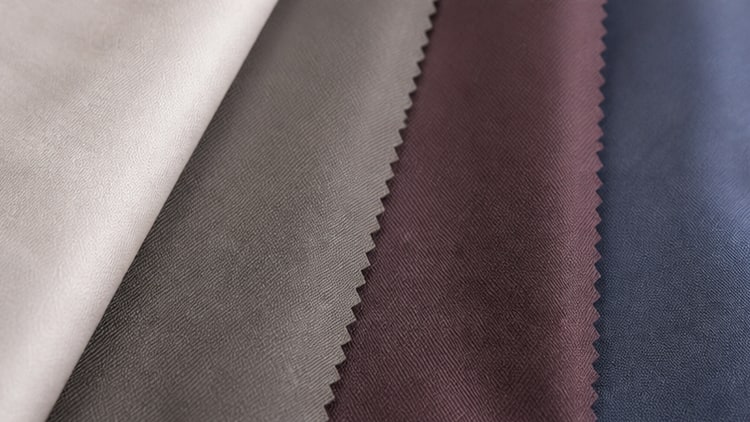
Set quilting conditions around the weight and recovery of the garment padding material, and review the lining fabric combination for surface transitions. Share the application area, target thickness and care method through contact.
FAQ
Can quilting spacing be determined by padding weight alone?
No. The correct spacing varies with bonding method, thickness, recovery, panel size and care conditions even at the same weight, so an assembly sample is necessary.
Is a good pre-wash appearance enough for bulk production?
Migration and thickness loss may appear during washing and drying. Test under the target care condition and reinspect seams and loft before approval.