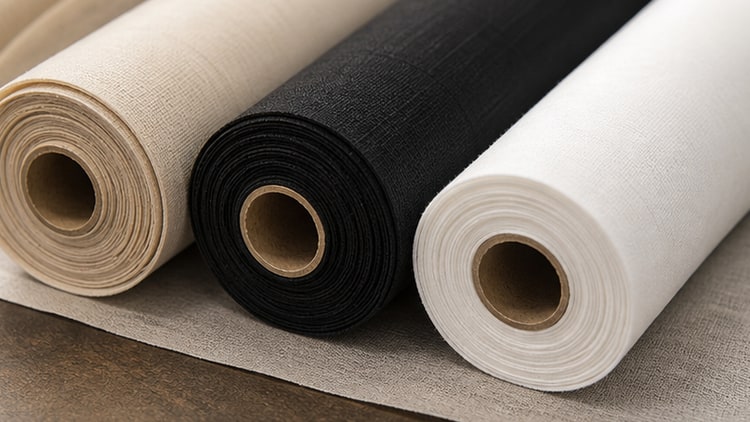

Pocketing fabric is inside the garment, but it directly affects pocket shape and service life. A large shrinkage difference from the shell or lining can pucker the pocket opening, create internal tension and disturb the silhouette after care. Before bulk production, compare dimensional change under the same conditions as carefully as construction and color.
Review shrinkage as a fabric combination, not an isolated number
Low shrinkage in the pocketing alone does not prevent issues when its change differs from the shell or lining. Review pocket openings, seam allowances and inner pockets by construction area, recording changes in both warp and weft. With stretch shells, check recovery difference as well.
Prepare specimens in the actual cutting direction
Construction can produce different lengthwise and widthwise change, so a random small swatch is not enough. Cut specimens in the same grain direction as the pattern, mark reference dimensions and measure again after washing or dry cleaning. Testing a sewn edge separately makes decisions more reliable.
Inspect pocket openings and inner pockets after care
Correct dimensions alone do not guarantee performance if the pocket opening curls or seams pucker. After care, use the pocket and check tension, sagging and opening distortion; for inner pockets, review tension against the lining. For trousers and other high-friction garments, repeated care tests are more useful.
Maintain the standard across lots and colors
Dimensional change can vary with dyeing, finishing and storage even within one item code. Keep item code, color, lot, test date and care condition with the approved sample, then use it for repeat orders. When sourcing through a Korea and Vietnam textile material supply network, share the same approval standard to reduce variation.
Practical checklist
- Test shell, lining and pocketing under the same care condition.
- Record reference length and change in warp and weft directions.
- Check pocket openings and inner-pocket seams for puckering and tension.
- Keep item code, color, lot and care condition with the approved sample.
- Compare a new-lot specimen against the approved reference before repeat orders.
Related products and consultation
For pocket construction, review pocketing fabric with lining fabric; garment tape can reinforce the opening. Share the shell and care conditions through contact.
FAQ
Should pocketing shrinkage be tested with the shell?
Yes. Most issues result from shrinkage and tension differences between materials, so compare at least the shell and pocketing under the same care condition.
Do dry-clean-only garments also need dimensional testing?
Yes. Solvent, heat and drying can still change fabric construction and seams, so test to the actual care-label condition.